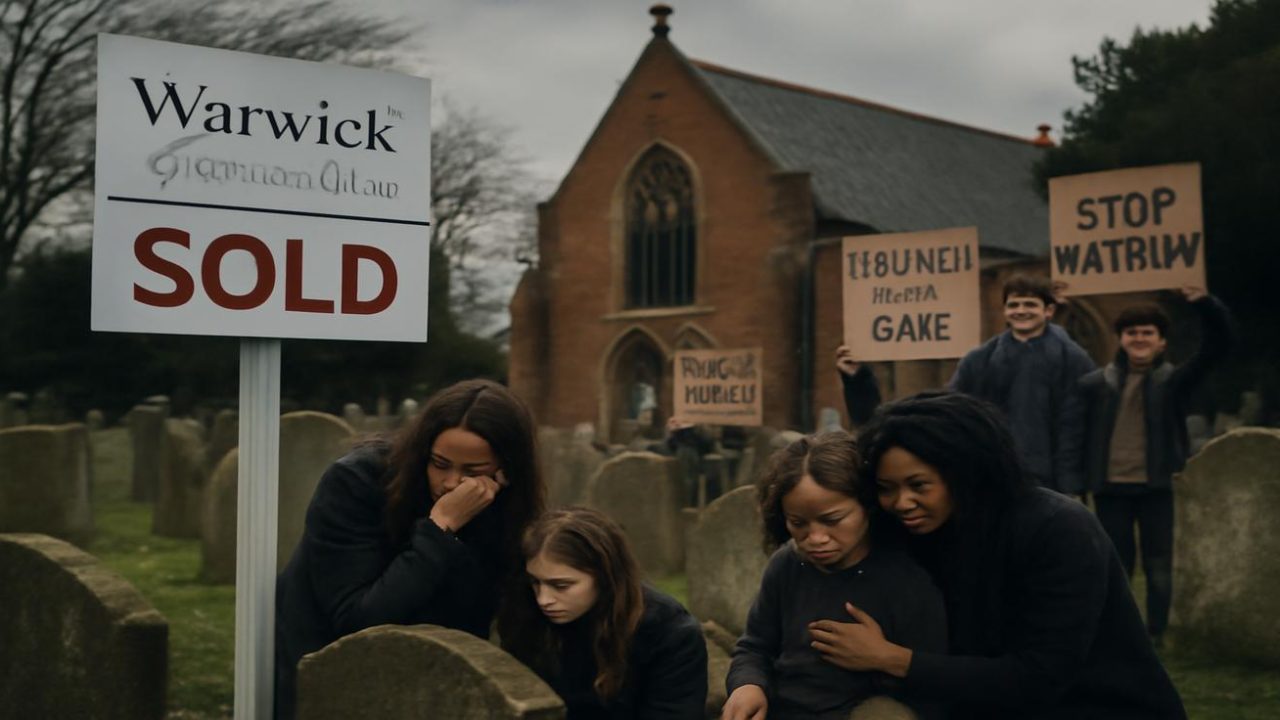
A bankrupt church’s decision to sell its century-old cemetery to a luxury developer has created an unprecedented crisis: families must now choose between paying annual rent to keep their loved ones buried or exhuming the remains at their own expense. The arrangement, approved by both diocese and courts, forces grieving families into an impossible financial decision that has divided communities across the nation.
The crisis began with a simple letter. Families received official notices from St. Bartholomew’s Church explaining that after more than a century of operation, the church could no longer afford to maintain its property. A private developer had purchased the grounds under a complex arrangement that gives families a stark choice: relocate their deceased family members at a “generously subsidized” cost or begin paying annual rent on graves for the duration of a new 30-year lease.
The letters warned that failure to choose an option by the stated deadline “may result in the reassignment or repurposing of grave plots in accordance with applicable law.” For families who thought their loved ones had found permanent rest, the language felt like a betrayal of the most sacred kind.

How a Century-Old Church Went Bankrupt
St. Bartholomew’s financial collapse followed a pattern now familiar to religious institutions nationwide. Declining attendance met rising costs in a perfect storm of economic pressure. The church’s roof required constant patching, the furnace was decades old, and bills for insurance, groundskeeping, and utilities grew heavier each year while collection plates grew lighter.
The pandemic years delivered the final blow. Weddings were postponed, funerals downsized, and Sunday services moved to shaky live streams with muted hymns. Traditional fundraising efforts—community suppers, capital campaigns—fell short of their targets. Volunteers initially took over groundskeeping duties but eventually grew older, busier, or simply too tired to continue.
Meanwhile, the land beneath the cemetery appreciated dramatically in value. When a developer’s representative arrived last winter, they came not with the black briefcase of old stories, but with glossy mock-ups of luxury townhouses, wellness centers with spas, and underground parking tucked discretely where generations had been buried with prayers and tears.

The developer promised to “preserve the historic façade” and spoke of “adaptive reuse”—transforming the stone bell tower into a restaurant or co-working hub. To a church council staring at a balance sheet written in red ink, the offer appeared as a lifeline. The diocese, managing dozens of similar churches in comparable financial straits, saw a potential template for other struggling properties.
The Impossible Choice Facing Families
The developer’s purchase agreement created two options for families with burial plots, both carrying significant costs and emotional trauma:
- Exhumation and relocation at a “subsidized” rate that families must still pay
- Annual rent payments to maintain grave sites under a 30-year lease agreement
- Plot reassignment for families who miss the deadline or cannot afford either option
The arrangement represents a fundamental shift in how Americans think about burial rights. For generations, purchasing a cemetery plot was understood as buying permanent rest for loved ones. The concept of ongoing rent payments for graves challenges basic assumptions about death, dignity, and family obligations.

Legal experts note that while the arrangement appears to comply with applicable laws, it exploits gaps in cemetery regulations that were written for a different era. Most cemetery protection laws focus on preventing development rather than regulating what happens when religious organizations can no longer afford maintenance.
A Crisis Spreading Across Religious Communities
St. Bartholomew’s situation reflects broader challenges facing religious institutions nationwide. Declining membership, aging infrastructure, and rising operational costs have pushed hundreds of churches, synagogues, and other religious organizations toward financial crisis.
| Challenge | Impact on Cemetery Operations |
|---|---|
| Declining attendance | Reduced funding for groundskeeping and maintenance |
| Aging infrastructure | Higher repair costs for century-old facilities |
| Pandemic restrictions | Lost revenue from weddings, funerals, and services |
| Rising property values | Increased pressure from developers seeking prime land |
The developer’s proposal included preserving the church’s stone façade while converting the interior into commercial space. Underground parking would be installed directly beneath existing grave sites, raising additional questions about the treatment of human remains and the sanctity of burial grounds.

Community members have expressed outrage not just at the financial demands, but at the language used in official communications. Terms like “plot holders,” “reassignment,” and “repurposing” reduce deeply personal losses to administrative categories. Families report feeling treated as if their deceased loved ones were office furniture rather than cherished family members.
The Legal and Ethical Questions
The arrangement raises unprecedented questions about property rights, religious obligations, and the commercialization of death. While courts and diocesan authorities approved the sale, critics argue that the decision prioritizes financial expedience over moral responsibility to families who trusted the church with their most sacred obligations.
The developer’s representatives emphasize their commitment to “adaptive reuse” and preserving historical elements. However, the practical reality involves transforming consecrated ground into commercial property while forcing families into ongoing financial relationships they never anticipated.

Some families received their letters while standing at kitchen sinks, others found them mixed with routine mail. The uniformity of the experience—white envelopes with official crests—contrasts sharply with the deeply personal nature of what they contained. By evening on the day letters arrived, more candles burned outside St. Bartholomew’s doors than inside them.
What Happens Next
Families face a deadline to choose between the two options presented in their letters. Those who cannot decide or cannot afford either choice risk having their plots “reassigned or repurposed” according to the legal language in the notices.
The situation has created a template that other struggling religious institutions and developers are watching closely. If successful, similar arrangements could spread to other communities facing comparable financial pressures.

Community members continue to gather outside the church, lighting candles and sharing stories about loved ones buried in ground that may soon house luxury townhouses. The silence that now hangs over the cemetery carries a different quality than before—not peaceful rest, but the held breath of families waiting to learn the fate of their most sacred spaces.
The developer’s timeline calls for construction to begin within the 30-year lease period, though specific dates have not been announced. Families choosing the rental option will need to budget for annual payments indefinitely, while those choosing exhumation must arrange for alternative burial sites and cover associated costs.
Frequently Asked Questions
Why can’t families just refuse to pay and keep their loved ones buried there?
The legal arrangement approved by courts and the diocese gives the developer authority to reassign or repurpose plots if families don’t choose one of the two options by the deadline.

How much will families have to pay for either option?
The letters mention “generously subsidized” costs for exhumation and annual rent for grave sites, but specific amounts have not been disclosed publicly.
Can other churches do the same thing?
Yes, the arrangement creates a legal template that other financially struggling religious institutions could potentially follow, though each situation would require separate court and diocesan approval.
What will happen to the church building itself?
The developer plans to preserve the historic stone façade while converting the interior into commercial space, possibly a restaurant or co-working hub.

Is this legal arrangement common?
No, this represents an unprecedented approach to cemetery management that exploits gaps in regulations written for a different era when church bankruptcies were less common.
How long do families have to decide?
The letters specify a deadline for choosing between the two options, though the exact timeframe has not been made public.











Leave a Comment