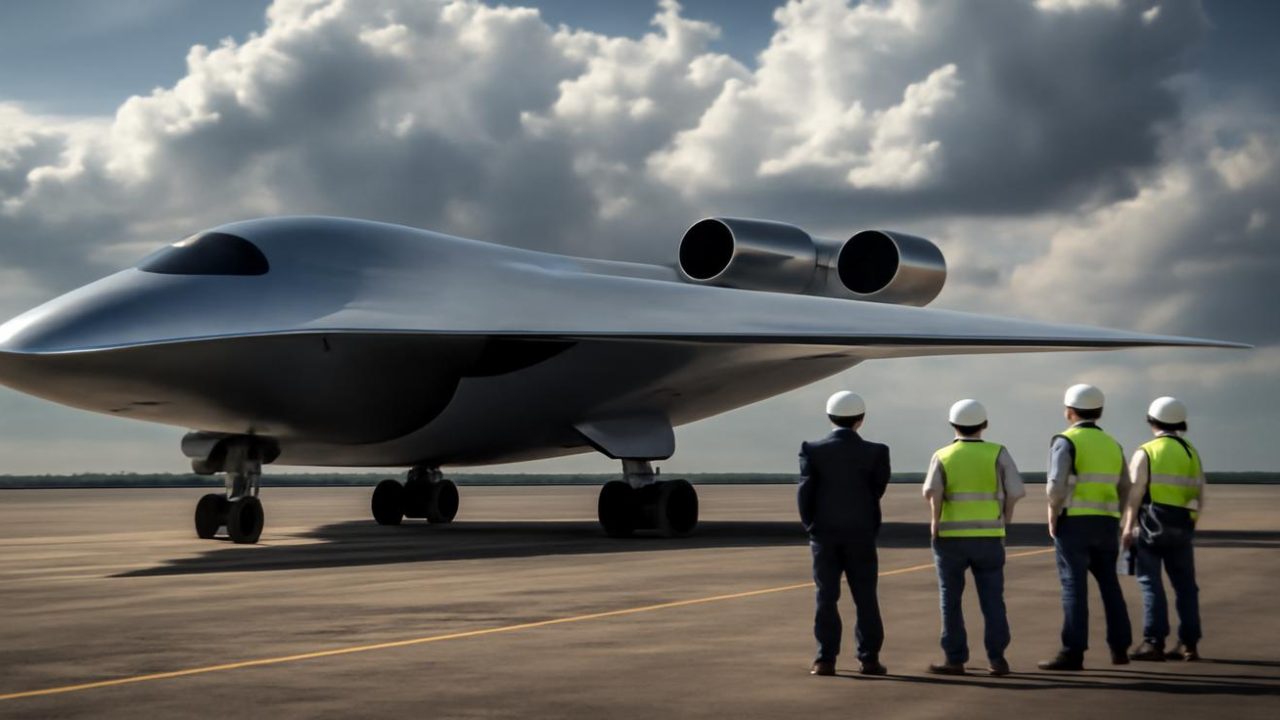
A revolutionary French aircraft claims to use eleven times less energy than conventional planes by mastering a flight technique that seabirds have perfected over millions of years. This groundbreaking approach to aviation could fundamentally change how we think about air travel efficiency.
The aircraft operates in what engineers call the “ground effect” — a thin layer of air between the surface and open sky where the laws of aerodynamics work differently. By staying just meters above water or flat terrain, this unusual plane achieves dramatic energy savings that traditional aviation has never managed.
Rather than muscling through the air with brute force like conventional aircraft, this French innovation glides almost effortlessly, resembling a seabird skimming over waves more than a typical passenger jet.

How Ground Effect Aviation Works
The secret lies in understanding how air behaves near surfaces. When a wing moves through air close to the ground or water, the surface prevents the normal swirling patterns of air from forming beneath the wing. This reduces drag significantly and increases lift efficiency.
Seabirds like albatrosses have exploited this phenomenon for millennia. Watch one gliding just above ocean waves, and you’re seeing nature’s most efficient flight technique in action. The bird harvests a cushion of denser, slower-moving air that keeps it aloft with minimal energy expenditure.
French engineers essentially reverse-engineered this natural process. Instead of designing an aircraft that occasionally benefits from ground effect, they built one specifically to live in that energy-efficient zone permanently.

The aircraft features wide wings designed to create a generous cushion of air and a hull-like lower body that can handle proximity to water surfaces. Every element is tuned for efficiency rather than raw power or speed.
Why Traditional Planes Burn So Much Energy
Conventional aircraft fly by overwhelming air resistance with massive amounts of thrust. They’re heavy, fast, and wasteful partly because jet fuel has historically been cheap enough to prioritize power over efficiency.
Most commercial planes operate at high altitudes where the air is thin, requiring constant engine power to maintain lift and forward momentum. The higher they fly, the more unforgiving the laws of physics become.

This French aircraft takes the opposite approach entirely. Instead of demanding more energy to overcome physics, it works with natural aerodynamic principles to need radically less.
The difference in energy consumption isn’t marginal — it’s transformational. While traditional jets guzzle fuel, this ground-effect aircraft sips energy like a hybrid car compared to a racing motorcycle.
Technical Specifications and Performance
The aircraft’s design represents a careful balance of multiple engineering innovations stacked together. Its appearance differs dramatically from conventional planes, with a slim, almost bird-like nose and uniquely configured wings.

Key features include:
- Whisper-quiet operation with minimal engine noise
- Gentle takeoffs that barely disturb water surfaces
- Hull-like lower body designed for ground-effect flight
- Wide wing configuration optimized for low-altitude efficiency
- Lightweight construction focused on gliding rather than power
The aircraft operates almost silently compared to traditional planes. There’s no familiar roar of jet engines, just a gentle whir as it glides along surfaces before lifting off with minimal splash or disturbance.
| Feature | Traditional Aircraft | French Ground-Effect Plane |
|---|---|---|
| Energy Efficiency | Standard consumption | 11 times less energy |
| Operating Altitude | High altitude | Meters above surface |
| Noise Level | High engine noise | Whisper-quiet |
| Flight Principle | Brute force thrust | Ground-effect gliding |
Real-World Applications and Limitations
This technology works best over water or flat terrain, making it ideal for coastal routes, island-hopping, and travel across large bodies of water. The aircraft essentially functions as a hybrid between a boat and a plane.

However, ground-effect flight has inherent limitations. The aircraft must stay close to surfaces, which restricts flight paths and makes it unsuitable for transcontinental routes over mountainous terrain.
For specific applications — such as short-haul flights between coastal cities, cargo transport across water, or connecting island communities — the energy savings could be revolutionary.
The aviation industry has long been addicted to fossil fuel consumption, making any technology that promises such dramatic efficiency gains potentially disruptive to established practices.

The Future of Energy-Efficient Aviation
This French aircraft represents a fundamental shift in aviation thinking. Instead of making traditional planes slightly more efficient, it questions whether we need traditional planes at all for certain applications.
The eleven-fold energy reduction isn’t achieved through a single breakthrough but through meticulous optimization of every design element for ground-effect flight.
If the technology proves reliable and scalable, it could transform short-haul aviation, particularly for routes over water. The environmental implications alone make this worth watching closely.

The team of engineers developing this aircraft started with what skeptics called an “impossible” idea. Their success in making it work suggests that aviation’s future might look very different from its past.
Frequently Asked Questions
How does this plane achieve eleven times better energy efficiency?
It operates in ground effect, flying just meters above surfaces where air behaves differently, creating more lift with less drag than high-altitude flight.
Can this aircraft fly over mountains or rough terrain?
The design is optimized for flight over water and flat surfaces, making it unsuitable for mountainous routes that require high-altitude capability.

How quiet is this aircraft compared to traditional planes?
It operates with just a gentle whir instead of the familiar roar of jet engines, making it significantly quieter than conventional aircraft.
What inspired this ground-effect design?
Engineers studied how seabirds like albatrosses glide efficiently just above ocean waves, then designed an aircraft to exploit the same aerodynamic principles.
When will this technology be commercially available?
The source material does not specify commercial availability timelines or production schedules for this aircraft.
What routes would benefit most from this technology?
Coastal routes, island-hopping flights, and cargo transport across water would be ideal applications given the aircraft’s need to fly close to surfaces.









Leave a Comment