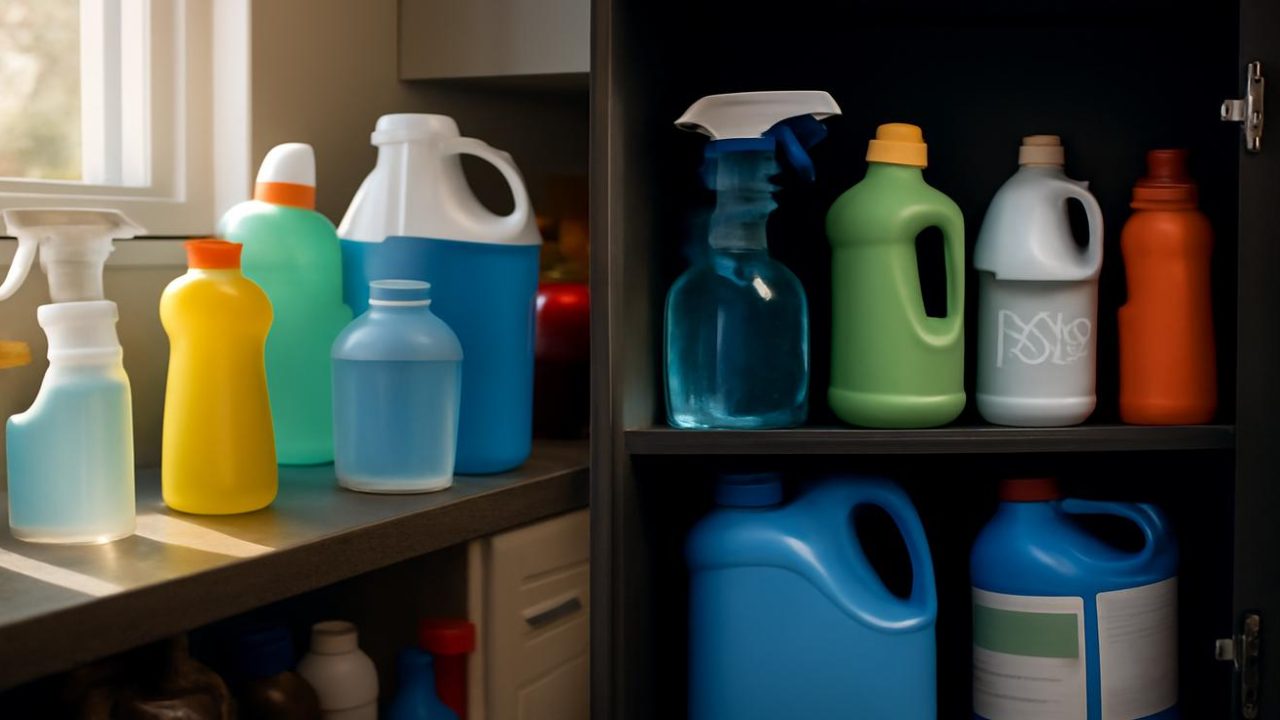
That cleaning spray you’ve been using for months might be delivering only half the germ-killing power it had when you first bought it. Most household cleaning products lose their effectiveness over time due to improper storage, yet few people realize their arsenal of bottles and sprays is quietly becoming less potent.
The decline happens gradually and invisibly. A disinfectant doesn’t suddenly stop working entirely — it simply gets weaker, bit by bit, until what once promised to “kill 99.9% of germs” becomes little more than scented water.
The problem isn’t just about wasted money. When cleaning products lose their strength, surfaces that look clean may still harbor bacteria, viruses, and other contaminants that could affect your family’s health.

Why Cleaning Products Go “Stale” in Your Home
Cleaning products are essentially chemistry sets with expiration dates and very specific storage requirements. Each formula contains delicate ingredients that manufacturers expect consumers to protect by following storage instructions — those tiny-print guidelines most people never read.
Temperature fluctuations pose one of the biggest threats to cleaning product integrity. Bleach products slowly decompose into salt and water when exposed to heat. Enzymatic cleaners, which contain living proteins designed to eat stains and odors, can be completely ruined by temperature swings.
Moisture creates another layer of problems. It can rust metal spray mechanisms, warp labels until they’re unreadable, and slowly break down cardboard containers. More critically, humidity allows volatile components — often key cleaning agents or solvents — to evaporate away, leaving behind a weaker, watery residue.

Even the plastic containers themselves begin to deteriorate. Bottles can become misshapen, caps crack, and threads warp just enough to prevent perfect seals. This allows air exchange between the product and the environment, further degrading the formula inside.
The Under-Sink Storage Disaster Most People Create
The cabinet under your kitchen sink represents one of the worst possible environments for cleaning product storage, yet it’s where most households keep their entire collection.
This dark space experiences constant humidity, especially when pipes drip even slightly. It’s also prone to dramatic temperature changes — cold in winter, warm and damp in summer, particularly if it backs onto an exterior wall. These conditions create the perfect storm for product degradation.

The proximity problem makes things worse. When ammonia-based cleaners, bleach, drain openers, and various spray bottles are crammed together in tight spaces, leaked fumes can mingle in the enclosed area. This creates potential toxic combinations while accelerating the breakdown of nearby products.
| Storage Location | Common Problems | Impact on Products |
|---|---|---|
| Under kitchen sink | Humidity, temperature swings, pipe leaks | Rust, label damage, chemical degradation |
| Laundry room | Heat from appliances, steam exposure | Accelerated decomposition, container warping |
| Bathroom cabinet | Steam from showers, high humidity | Moisture damage, reduced effectiveness |
| Garage storage | Extreme temperature changes, freezing | Formula separation, container cracking |
Why Your Nose Can’t Tell You If Products Still Work
Many people rely on smell to judge whether a cleaning product remains effective. If it still has that harsh chemical odor or familiar floral scent, it must be working, right?
This assumption proves dangerously wrong. Smell provides a poor guide to actual cleaning power. Fragrance compounds often survive long after active cleaning ingredients have broken down or evaporated. A product can smell exactly the same while delivering dramatically reduced performance.

Some products even smell stronger as they degrade. When volatile solvents evaporate, they can leave behind concentrated fragrance oils that create a more intense scent despite weakened cleaning ability.
The reverse also happens — products that lose their smell might retain full effectiveness. Many truly powerful cleaning agents are naturally odorless, relying on added fragrances to signal “cleanliness” to consumers.
What Happens When Cleaning Products Lose Their Power
The consequences of degraded cleaning products extend far beyond wasted money. Surfaces that appear clean may harbor dangerous microorganisms that your weakened disinfectants failed to eliminate.
Kitchen counters treated with compromised all-purpose cleaners might still host foodborne bacteria. Bathroom surfaces cleaned with degraded disinfectants could maintain colonies of harmful germs. Glass cleaners that have lost their active ingredients leave behind streaky, hazy surfaces that look dirty despite your cleaning efforts.
The problem compounds over time. When people notice their usual cleaning routine isn’t delivering expected results, they often blame their technique rather than their products. They scrub harder, use more product, or clean more frequently — all while the underlying issue remains unaddressed.
Mildew keeps returning because your bathroom cleaner has lost its anti-fungal properties. Grease builds up faster because your degreaser no longer cuts through oils effectively. Stains become permanent because your stain remover’s enzymes died months ago in fluctuating temperatures.
How to Protect Your Cleaning Product Investment
Proper storage requires finding locations that maintain steady temperatures between 50-80°F with low humidity levels. Interior closets, pantries, or dedicated cleaning supply cabinets work better than under-sink storage.
Keep products in their original containers with tightly sealed caps. Never transfer cleaning solutions to unmarked bottles, as you’ll lose crucial information about ingredients, dilution ratios, and expiration dates.
Organize products by type and check expiration dates regularly. Most cleaning products remain effective for 1-2 years when stored properly, but this timeline shrinks dramatically under poor conditions.

Create separation between different product types, especially anything containing bleach or ammonia. These should never be stored near each other due to the risk of dangerous chemical reactions if they leak.
Consider the specific needs of different product categories. Enzymatic cleaners are particularly sensitive to temperature changes. Aerosol products should never be stored in areas that could reach freezing temperatures. Liquid bleach products need cool, dark environments to maintain their potency.
Frequently Asked Questions
How can I tell if my cleaning products have lost their effectiveness?
Look for changes in consistency, color, or separation of ingredients, but don’t rely on smell alone as an indicator of potency.

Do cleaning products really expire?
Yes, most cleaning products remain effective for 1-2 years when stored properly, but degradation accelerates under poor storage conditions.
Is it safe to use cleaning products that have been stored improperly?
While they may not be dangerous, improperly stored products often lose effectiveness and won’t clean or disinfect as intended.
What’s the worst place to store cleaning supplies?
Under the kitchen sink combines humidity, temperature fluctuations, and confined spaces that accelerate product degradation.
Can I restore effectiveness to degraded cleaning products?
No, once cleaning products have lost their active ingredients through evaporation or decomposition, their effectiveness cannot be restored.
Should I throw away products that smell different than when I bought them?
Changes in smell, consistency, or appearance often indicate degradation, and these products should be replaced for optimal cleaning results.







Leave a Comment