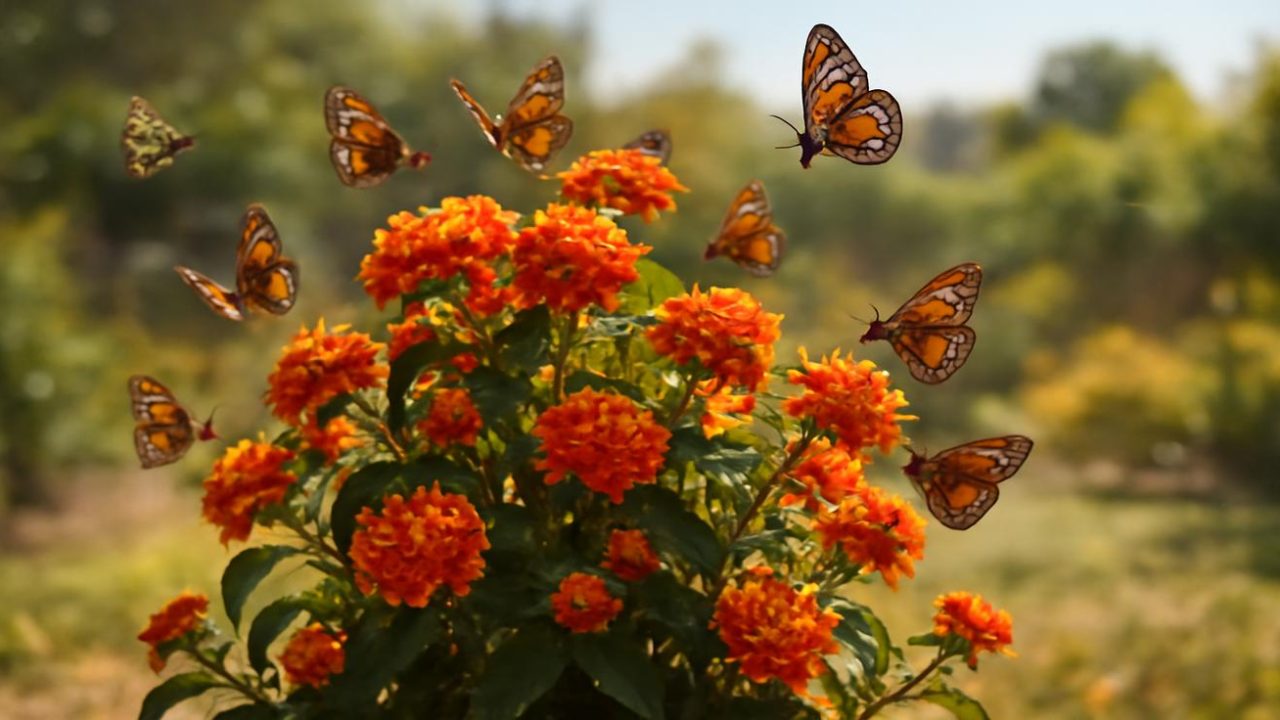
When temperatures soar and most garden plants wilt under scorching heat, one flowering plant stands defiant — attracting clouds of butterflies while thriving in conditions that leave other flowers gasping. Butterfly weed, also known as milkweed or Asclepias, transforms brutal summer heat from a death sentence into an invitation for nature’s most spectacular pollinator show.
This hardy perennial doesn’t just survive extreme weather — it revels in it. While lawns turn brown and hydrangeas droop like tired laundry, butterfly weed waves its vibrant orange, yellow, and red flowers as if blistering heat were nothing more than a mild inconvenience.
The secret lies in its prairie heritage. Born of roadsides, forgotten fields, and windswept grasslands, butterfly weed has spent centuries learning how to endure drought, poor soil, and relentless sun with stubborn resilience.

The Plant That Refuses to Wilt
Butterfly weed goes by many names — milkweed, Asclepias, or simply “that orange thing by the mailbox that never dies.” To casual observers, it appears as just another tough perennial with bright flower clusters. But to butterflies, especially monarchs, it represents home, nursery, and lifeline all rolled into one.
The plant’s survival features are immediately apparent up close. Thick, slightly leathery leaves hold moisture when everything else curls and crisps. Upright, stubborn stems feel rough under your fingers but remain standing when other plants collapse. The flowers display impossibly vivid colors — oranges like molten glass, yellows like late-afternoon sun, and deeper reds and pinks in some varieties.
A faint, sweet, milk-sap scent hangs in the air around mature plants. While humans might barely detect this fragrance in dry heat, insects follow it like a signal flare, drawn from across neighborhoods to its promise of nectar and nourishment.

In a gardening world where beloved plants demand constant coddling — extra water, rich soil, shade cloth, endless fertilizer — butterfly weed stands as the no-nonsense survivor. Its prairie DNA makes it perfectly suited for anyone with a backyard, balcony, or sunny patch of ground that feels impossible to plant.
Why Butterflies Treat It Like a Five-Star Hotel
The relationship between butterfly weed and butterflies runs deeper than simple attraction. For monarch butterflies specifically, plants in the milkweed family aren’t just a favorite snack — they’re an absolute biological requirement.
Monarch caterpillars can only eat milkweed. Female monarchs will lay their eggs nowhere else. Without access to milkweed plants, the famous monarch migration — those epic journeys across continents — would simply unravel.

Butterfly weed ranks among the most heat-tolerant, garden-friendly members of the milkweed family. When a monarch flutters into a garden on a scorching summer day, she’s searching for somewhere safe to leave the next generation. The bright flower clusters work like runway lights guiding her approach.
On the underside of a selected leaf, she’ll place a tiny white egg smaller than a pinhead. Within days, that egg becomes a distinctive striped caterpillar, already armored with the plant’s unique chemistry.
The Chemical Defense System That Creates Superpowers
The milky sap that leaks when a leaf breaks contains compounds most animals refuse to touch. Monarchs, however, have evolved to not only eat these chemicals but store them and carry them in their bodies as protection.

This evolutionary adaptation creates a remarkable defense system. Predators that learn the hard way — with a bitter-tasting bite — typically avoid monarchs in the future. The caterpillars chomp methodically along leaves, fattening up in unforgiving sunshine, completely unconcerned with heat that would stress other insects.
The plant, shaped by centuries of tough growing seasons, simply produces more foliage to support its hungry guests. This symbiotic relationship benefits both species while creating the spectacular butterfly displays that make gardeners stop and stare.
| Butterfly Species | Relationship to Butterfly Weed | Behavior Pattern |
|---|---|---|
| Monarchs | Essential for reproduction | Lay eggs exclusively on milkweed plants |
| Swallowtails | Nectar source | Visit flowers for feeding |
| Painted Ladies | Nectar source | Regular visitors during blooming season |
| Skippers | Nectar source | Quick, darting visits between flowers |
Creating a Butterfly Paradise in Harsh Conditions
The magic of butterfly weed extends beyond monarchs. All summer long, mature plants bristle with diverse insect life. Swallowtails swing in like tiny kites with black and yellow wings flashing. Skippers and bees dart from floret to floret with purposeful energy.

Sometimes entire plants hum with an audible buzz that rises and falls as if the plant were breathing. This acoustic signature indicates a thriving ecosystem where multiple species feed, interact, and reproduce simultaneously.
The timing works perfectly for both plants and pollinators. Butterfly weed blooms during the hottest months when many other nectar sources have faded. This reliability makes it a crucial resource for butterfly populations struggling with habitat loss and climate challenges.
For gardeners, this means installing a single tough plant can transform a struggling sunny spot into a wildlife magnet. The visual payoff — clouds of colorful wings dancing around brilliant flowers — rivals any high-maintenance garden display.

Practical Benefits Beyond Beauty
Butterfly weed offers advantages that extend beyond its obvious wildlife appeal. Its deep taproot system helps it access moisture other plants cannot reach, making it genuinely drought-tolerant once established.
The plant requires no fertilization, preferring poor to average soils over rich garden beds. This preference makes it ideal for challenging locations where other perennials struggle or fail entirely.
Maintenance requirements stay minimal throughout the growing season. No deadheading, no staking, no disease treatments — just reliable blooms from early summer through fall in most climates.

The flowers also work well in cut arrangements, though harvesting reduces the butterfly habitat value. Many gardeners choose to plant multiple clumps, reserving some for cutting while leaving others untouched for wildlife.
Supporting Conservation Through Gardening
Planting butterfly weed contributes directly to monarch butterfly conservation efforts. Monarch populations have declined significantly in recent decades due to habitat loss, pesticide use, and climate change impacts.
Every milkweed plant represents potential breeding habitat for traveling monarchs. During migration seasons, a single mature butterfly weed plant might support multiple generations of caterpillars, each eventually joining the great continental journey.

This conservation impact happens automatically once the plant establishes itself. Gardeners need only provide the initial planting site and occasional watering during the first season. Nature handles the rest, creating wildlife value that compounds year after year.
The plant’s longevity means this conservation contribution continues for decades with minimal human intervention. Established clumps often expand naturally, increasing habitat value over time.
Frequently Asked Questions
How hot can butterfly weed tolerate?
Butterfly weed thrives in extreme heat that wilts most garden plants, with thick, leathery leaves designed to retain moisture during scorching weather.
Do monarch caterpillars only eat butterfly weed?
Monarch caterpillars can only eat plants in the milkweed family, making butterfly weed and related species absolutely essential for monarch reproduction.
How long does butterfly weed bloom?
The plant produces flowers throughout the hottest summer months when many other nectar sources have faded, providing crucial resources for pollinators.
Does butterfly weed need special soil?
Butterfly weed actually prefers poor to average soils over rich garden beds and requires no fertilization once established.
Will butterfly weed attract other insects besides butterflies?
Yes, mature plants attract swallowtails, skippers, bees, and various other pollinators, often creating an audible buzzing sound from all the activity.
How much maintenance does butterfly weed require?
Once established, butterfly weed needs minimal care — no deadheading, staking, or disease treatments, just reliable blooms with very little intervention.











Leave a Comment