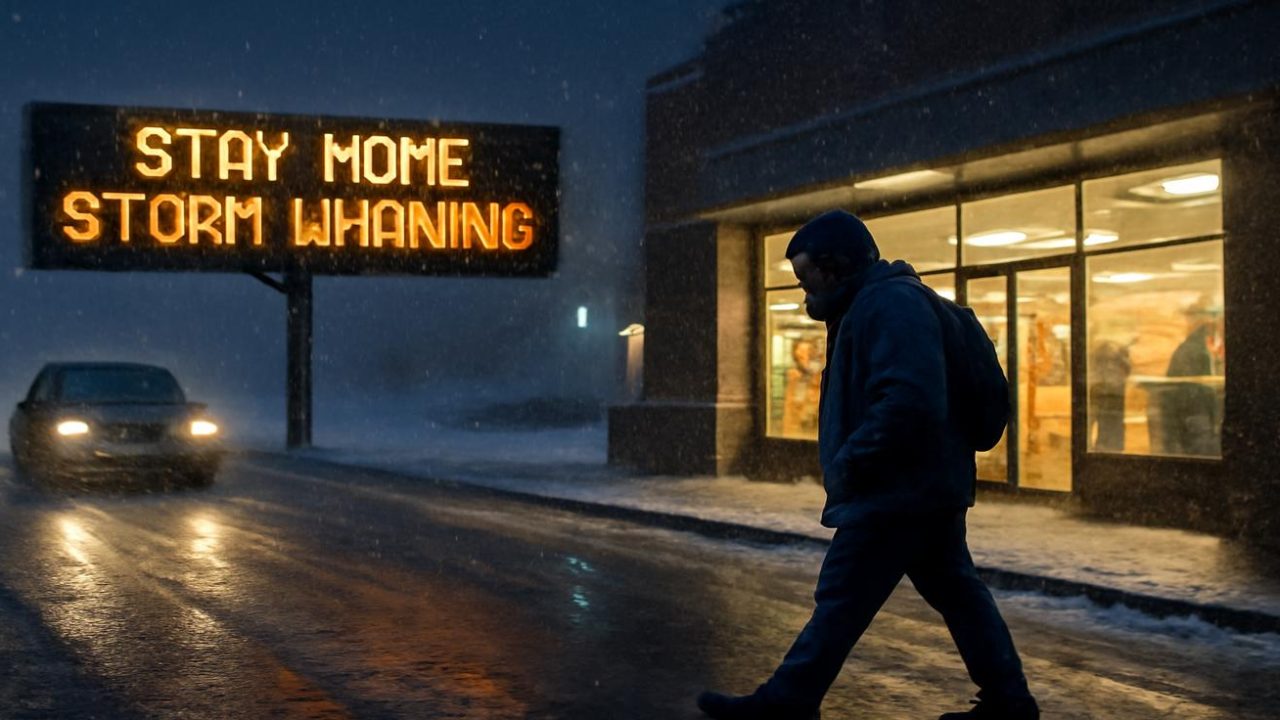
When winter storms threaten, millions of workers face an impossible choice: risk their safety traveling in dangerous conditions or risk their livelihood by staying home. As heavy snow begins falling across communities tonight, this familiar dilemma plays out once again, with state officials urging people to avoid the roads while many businesses remain open and expect their employees to show up.
The conflict between public safety warnings and economic necessity creates a gray area where workers must weigh immediate physical danger against the long-term consequences of missing work. Weather emergencies expose the fragile balance many people maintain between job security and personal safety.
This tension becomes particularly acute during severe weather events, when the gap between official safety recommendations and workplace expectations can leave employees feeling caught between competing pressures.

The Reality of Working Through Winter Storms
As snow accumulates and driving conditions deteriorate, essential services like grocery stores, hotels, and healthcare facilities often maintain regular operations. The reasoning is straightforward: people need food, shelter, and medical care regardless of weather conditions.
However, the definition of “essential” can vary significantly between employers and employees. While state officials classify most travel as non-essential during severe weather events, many businesses operate under the assumption that their services remain necessary for the community.
The challenge intensifies for hourly workers who cannot afford to lose wages. Missing a shift during a storm might mean missing rent payments, grocery money, or other critical expenses. This economic pressure often outweighs safety concerns, pushing people onto dangerous roads despite official warnings.

National retail chains and service businesses typically maintain corporate policies requiring stores to remain open unless local regulations mandate closure or power outages force the issue. These policies create situations where individual locations stay operational even when local conditions become hazardous.
Who Bears the Greatest Risk
The burden of storm-related travel falls disproportionately on certain groups of workers. Service industry employees, healthcare workers, retail staff, and maintenance personnel often have the least flexibility in their schedules and the greatest pressure to report for duty regardless of conditions.
Many of these workers also face additional challenges during severe weather:

- Older vehicles that perform poorly in snow and ice
- Inability to afford alternative transportation options
- Jobs without paid time off or weather-related leave policies
- Managers who expect attendance regardless of travel advisories
- Shift work that requires travel during the worst weather hours
The overnight shift presents particular dangers, as workers must navigate roads after snow has been falling for hours and before morning plowing operations clear major routes. Hotel maintenance staff, hospital workers, and 24-hour store employees often find themselves driving through the most dangerous conditions.
Geographic location also plays a role. Workers in suburban and rural areas may face longer commutes on roads that receive less frequent plowing and salting attention compared to major highways and city centers.
The Economics Behind Staying Open
Business decisions about remaining open during severe weather involve complex calculations about revenue, staffing, and customer expectations. Grocery stores often see increased sales before and during storms as people stock up on necessities. Hotels may experience unexpected demand from stranded travelers.

The financial pressure to maintain operations can be significant, particularly for businesses operating on thin margins. A single day of closure might represent thousands of dollars in lost revenue, creating powerful incentives to remain open even when conditions are dangerous.
| Business Type | Storm-Related Challenges | Typical Response |
|---|---|---|
| Grocery Stores | Increased demand, delivery issues | Extended hours, full staffing |
| Hotels | Stranded travelers, maintenance needs | Maintain all services |
| Healthcare | Critical patient needs, emergencies | Mandatory attendance policies |
| Restaurants | Reduced customers, delivery risks | Mixed responses |
Corporate policies often prioritize consistency across multiple locations, making it difficult for individual managers to make location-specific decisions about closure. This can result in stores remaining open in areas where local conditions are particularly severe.
When Safety Warnings Meet Economic Reality
The disconnect between official safety recommendations and workplace expectations creates a burden that falls primarily on individual workers. State highway departments and emergency management officials issue travel warnings based on road conditions and accident risks, but these warnings carry no legal weight for private employers.

Workers must make personal risk assessments that balance immediate safety concerns against potential job consequences. Many report feeling pressured to attempt dangerous commutes rather than face questions about their commitment or reliability.
The situation becomes more complex when some employees can safely reach work while others face more dangerous conditions. Geographic variations in storm intensity, road maintenance, and traffic patterns mean that workers living in different areas may experience vastly different levels of risk for the same shift.
Some employers attempt to address these concerns by offering overtime pay for storm shifts or providing temporary accommodation for workers who cannot safely return home. However, these policies are not universal and often depend on the individual business’s resources and priorities.

What Happens When the Storm Passes
The immediate safety concerns of traveling in severe weather represent only part of the challenge. Workers who choose to stay home during dangerous conditions may face questions about their decision when conditions improve, particularly if other employees managed to make it to work.
The aftermath of winter storms often reveals the uneven impact on different workers. Those with newer vehicles, shorter commutes, or more flexible schedules may weather the storm without significant consequences, while others may face lost wages, attendance issues, or strained relationships with supervisors.
Recovery from severe weather events can take days or weeks, particularly in areas where power outages or road damage extend the disruption. Workers may face additional challenges commuting even after the immediate storm passes, as secondary roads remain unplowed and parking lots stay blocked by snow.

The long-term effects often depend on employer policies and local resources for storm recovery. Communities with robust snow removal operations and businesses with flexible attendance policies tend to see faster returns to normal operations.
Frequently Asked Questions
Can employers require workers to come in during severe weather warnings?
Yes, unless local emergency declarations specifically prohibit travel, employers can generally require attendance during severe weather.
Do workers have legal protection if they refuse to drive in dangerous conditions?
Legal protections vary by state and are generally limited unless specific emergency orders are in place.

Are employers required to provide extra pay for working during storms?
No federal requirement exists, though some employers voluntarily offer hazard pay or overtime rates during severe weather.
What happens if a worker gets in an accident driving to work during a storm?
Workers’ compensation may apply depending on state laws and specific circumstances, but coverage is not guaranteed.
Do businesses face liability if they require employees to travel in dangerous conditions?
Potential liability exists but varies significantly based on state laws and specific circumstances.
How do essential vs. non-essential business classifications work during storms?
These classifications typically only apply during declared emergencies and vary by location and type of emergency declaration.










Leave a Comment