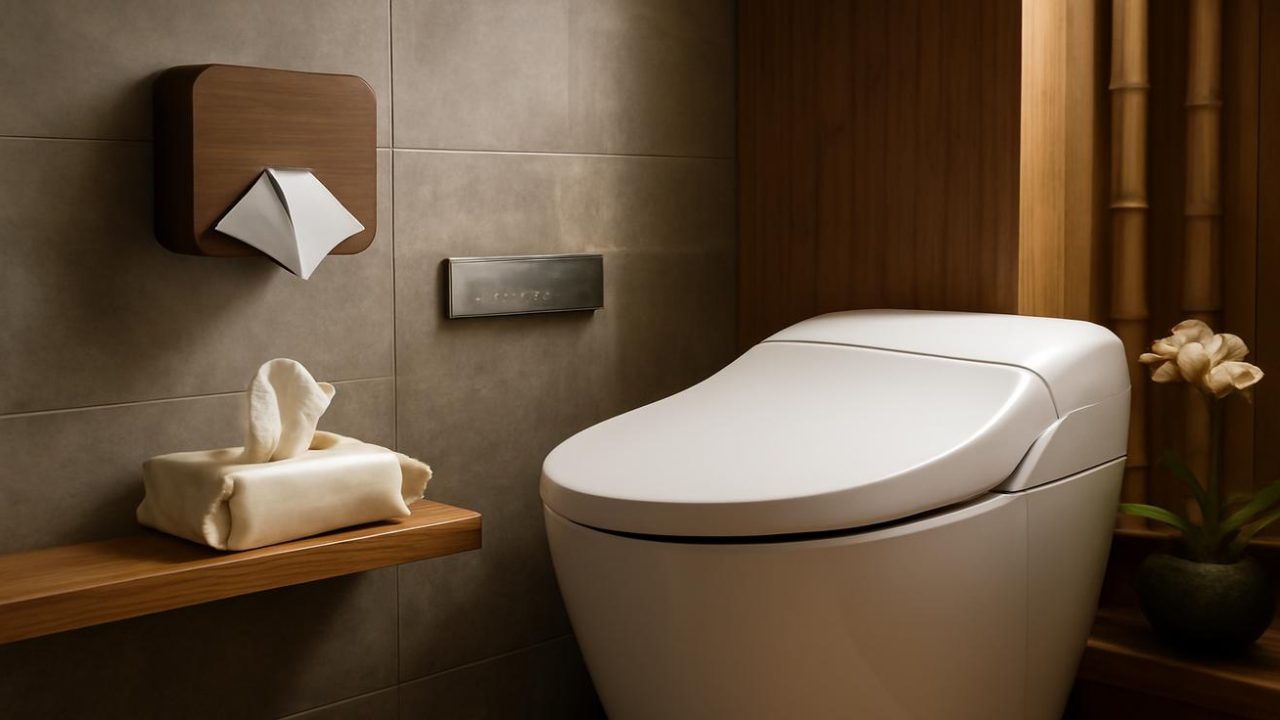
Japan’s toilet paper industry is quietly undergoing a transformation that has nothing to do with the country’s famous high-tech washlets and heated seats. While tourists marvel at control panels with dozens of buttons, a different kind of revolution is unfolding in the aisles of Japanese supermarkets—one driven by clogged pipes, environmental concerns, and a growing awareness that luxury comes with hidden costs.
For decades, Japanese consumers embraced the softest, thickest toilet paper available, wrapped in cheerful packaging with cartoon bears and flowers. But sewage workers in cities like Osaka and Fukuoka began encountering a troubling problem: massive tangles of non-dissolving materials choking the municipal pipe systems.
The discovery has sparked a fundamental shift in how Japan thinks about one of its most basic daily necessities.

The Hidden Infrastructure Crisis Behind Japan’s Bathroom Culture
Japan’s reputation for bathroom excellence extends far beyond the famous washlet toilets found in department stores and tiny ramen shops across the country. The heated seats, customizable bidets, and privacy sounds that mask awkward moments have achieved legendary status among travelers worldwide.
But this technological marvel created an unexpected blind spot. While engineers perfected water pressure settings and warm-air drying systems, the humble toilet paper remained an afterthought—a secondary character overshadowed by streams, sprays, and digital controls.
That oversight became impossible to ignore when maintenance crews started pulling strange, clotted masses from deep within the sewage systems. The culprits weren’t just the obvious suspects like “flushable” wipes, but also the premium toilet papers that Japanese consumers had come to expect.

Municipal authorities, typically restrained in their public communications, issued unusually pointed notices. The message was clear: the softer and denser the paper, the harder it becomes for water and microbes to break it down during wastewater treatment.
Why Japan’s Toilet Paper Problem Extends Beyond Plumbing
The infrastructure challenges represent just one layer of a more complex issue. Japan imports a significant portion of the pulp used in its toilet paper manufacturing, creating invisible supply lines that stretch back to managed forests and distant mountains.
As climate awareness has grown, these connections have become harder for consumers to ignore. Every roll on every supermarket shelf now carries questions about sustainability that previous generations rarely considered.

The environmental calculations are straightforward but sobering:
- Triple-ply luxury toilet paper requires significantly more raw materials per roll
- Denser papers create processing challenges for wastewater treatment facilities
- Import dependency means transportation emissions factor into the environmental cost
- Non-dissolving materials can damage municipal infrastructure
Scientists and engineers have joined municipal authorities in explaining the technical realities. That dreamily soft roll that feels luxurious to consumers becomes a small nightmare for treatment facilities trying to process it efficiently.
The Sustainable Shift Happening in Japanese Supermarkets
The transformation hasn’t arrived through dramatic headlines or government mandates. Instead, it’s creeping through supply chains and procurement decisions, one supermarket aisle at a time.

Japan already leads globally in recycling rates, and this expertise is now being applied to toilet paper in ways that would have seemed unthinkable just a few years ago. The country is turning its attention to what happens after that roll disappears into the plumbing system.
Hotel chains and office buildings are quietly adjusting their supply orders. Neighborhood recycling programs are expanding their focus. The shift represents a broader reckoning with the true cost of daily luxuries that previous generations took for granted.
| Traditional Approach | Emerging Alternative |
|---|---|
| Emphasis on softness and thickness | Focus on biodegradability and dissolution |
| Premium multi-ply construction | Engineered single-ply that breaks down quickly |
| Imported pulp materials | Increased use of recycled content |
| Cartoon packaging emphasizing comfort | Environmental messaging and technical specifications |
What This Means for Japanese Consumers and Global Markets
The toilet paper revolution reflects broader changes in Japanese consumer behavior. In a country where politeness extends to municipal notices and public communications, the direct warnings about flushing habits represent an unusually urgent tone.

For consumers, the shift means reevaluating assumptions about quality and comfort. The new generation of toilet papers feels different—not quite like the thick Western rolls or the rough utilitarian alternatives, but something carefully engineered to balance user experience with environmental responsibility.
The changes extend beyond individual purchasing decisions. Office managers, hotel procurement teams, and facility maintenance crews are all part of a quiet transformation that prioritizes long-term sustainability over immediate comfort.
This shift could influence global toilet paper markets, particularly as other countries grapple with similar infrastructure and environmental challenges. Japan’s approach to balancing consumer expectations with practical constraints offers a model that extends well beyond bathroom products.

The Future of Japan’s Bathroom Revolution
The toilet paper transformation represents a maturation of Japan’s bathroom culture. While the country’s high-tech toilets captured international attention with their impressive features and space-age control panels, the real innovation may be happening at a more fundamental level.
The revolution unfolding one sheet at a time suggests that true bathroom excellence requires thinking beyond individual user experience to consider broader systems and consequences. It’s a shift from asking “how soft can we make this?” to “how can we make this work better for everyone?”
As climate concerns continue to influence consumer behavior and municipal authorities face ongoing infrastructure challenges, Japan’s quiet toilet paper revolution may prove more significant than its famous washlet technology. The country that fell in love with the flush is now learning to think more carefully about what goes down the drain.

Frequently Asked Questions
What specific problems are Japanese sewage systems experiencing?
Sewage workers in cities like Osaka and Fukuoka are finding tangled masses of non-dissolving materials, including thick toilet papers and flushable wipes, clogging municipal pipe systems.
Why is soft toilet paper problematic for wastewater treatment?
The softer and denser the paper, the harder it is for water and microbes to break it down during processing, creating challenges for treatment facilities.
How much toilet paper pulp does Japan import?
Japan imports a large portion of the pulp used in toilet paper manufacturing, though specific percentages are not provided in current reports.

Are Japanese municipalities issuing official warnings about toilet paper?
Yes, authorities in various cities have issued public notices asking residents not to flush wipes and to choose toilet paper that breaks down properly.
What makes the new toilet paper different from traditional options?
The emerging alternatives are engineered to dissolve more quickly while balancing user comfort, often featuring recycled content and different fiber construction.
Is this change happening through government regulation?
The transformation appears to be market-driven rather than mandated, spreading through supply chains, procurement decisions, and consumer awareness rather than official policy changes.











Leave a Comment