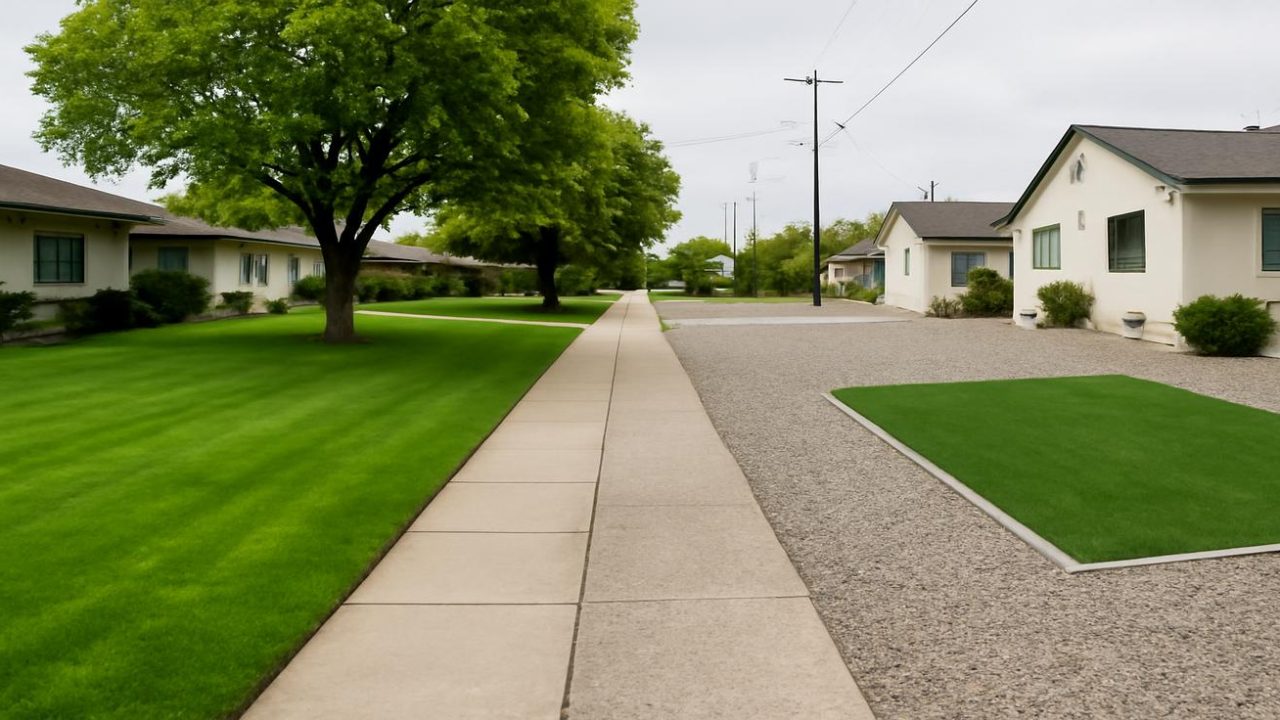
Artificial turf can reach temperatures dramatically higher than natural grass on summer afternoons — sometimes even hotter than asphalt — yet homeowners across suburban America are ripping out their front lawns at an unprecedented rate. The new trend combines plastic grass with bone-white gravel, promising lower water bills and zero maintenance while creating what critics call “biological dead zones” in neighborhoods once alive with birds and beneficial insects.
The transformation is happening block by block, weekend by weekend. Dump trucks line suburban streets as crews strip away soil, roll out weed cloth, and install synthetic landscapes that glare under afternoon sun. What’s driving this dramatic shift isn’t just aesthetics — it’s a collision of rising water costs, drought concerns, and time-pressed homeowners seeking the ultimate low-maintenance solution.
But the hidden costs behind these manicured surfaces are sparking a quiet rebellion among neighbors who find themselves living in what feels less like a community and more like a parking lot with green carpet.

The Water-Wise Promise That’s Reshaping Front Yards
The marketing pitch sounds almost irresistible: no more weekend mowing, no muddy paw prints, no guilt when sprinklers run during drought restrictions. Artificial turf and gravel combinations are sold as “water-wise,” “maintenance-free,” and “future-proof” solutions for modern suburban living.
Cities tightening water restrictions and homeowners watching utility bills climb make the argument for synthetic lawns seem logical. Traditional grass lawns do consume significant water, especially in arid regions where drought maps show deeper shades of red each year.
The installation process follows a predictable pattern: existing lawn gets stripped to bare dirt, weed cloth goes down, then crews install artificial turf over compacted base rock. Decorative gravel fills the borders, creating clean lines and eliminating any possibility of weeds or unwanted growth.

For homeowners pressed for time and tired of lawn maintenance, the transformation feels like liberation from weekend chores and seasonal yard work. The immediate result is a picture-perfect landscape that stays green year-round without watering, fertilizing, or mowing.
The Environmental Trade-offs Nobody Mentions in the Brochures
While artificial turf eliminates water usage, it also eliminates something else: the living ecosystem that even basic grass lawns support. Traditional turf wasn’t an ecological paradise, but it did host soil organisms, worms, ground beetles, and occasional foraging birds. Add flowering weeds or native plants to the mix, and bees, butterflies, and songbirds follow.
Synthetic landscapes create the opposite effect. Plastic turf over compacted rock offers no nectar for pollinators, no seeds for birds, no cool handful of living soil for beneficial insects. The result is what ecologists recognize as a biological dead zone — a surface you can stand on but that supports virtually no wildlife.
| Yard Type | Water Use | Biodiversity Support | Heat Impact | Maintenance |
|---|---|---|---|---|
| Natural Grass | High | Moderate | Cooling effect | Weekly mowing |
| Artificial Turf | Zero | None | Heat amplification | Minimal |
| Native Plants | Low | High | Cooling effect | Seasonal |
| Gravel/Rock | Zero | None | Heat reflection | Minimal |
The heat impact creates another layer of unintended consequences. Living grass feels cool on summer afternoons, releasing moisture through transpiration that naturally cools the surrounding air. Artificial turf does the opposite, absorbing and radiating heat that can make synthetic lawns scorching to touch during peak temperatures.
Light-colored gravel compounds the problem by reflecting heat and light back into the air, amplifying what urban planners call the heat island effect. Streets lined with these synthetic landscapes can feel noticeably hotter than neighborhoods with traditional vegetation.
The Hidden Costs of Going Maintenance-Free
Artificial turf doesn’t emerge from some benevolent, water-conserving source — it’s petroleum-based plastic, often filled with crumb rubber or other synthetic materials. The manufacturing, shipping, and installation process involves multiple layers of fabric, plastic, and stone that must be transported and assembled on-site.
The “set-it-and-forget-it” promise also has an expiration date. Synthetic turf breaks down under constant sun exposure and foot traffic, typically requiring replacement after several years of use. When that happens, old rolls head to landfills while new petroleum-based materials get manufactured and shipped to replace them.
During its lifespan, artificial turf gradually sheds microplastics into soil and waterways — a form of pollution that’s invisible to homeowners but measurable to environmental scientists studying plastic contamination in urban runoff.
The long-term maintenance costs aren’t zero either. Synthetic turf requires periodic cleaning, occasional repairs, and eventual replacement. Gravel needs replenishment and weed control along borders where organic matter inevitably accumulates.

Why Neighbors Are Getting Furious About Front Lawn Trends
The backlash isn’t just about aesthetics, though visual concerns play a role. Residents who moved to suburban neighborhoods expecting a certain relationship with the natural world find themselves surrounded by surfaces that feel more commercial than residential.
The ecological impact becomes personal when songbirds stop visiting feeders, when beneficial insects disappear from gardens, when the subtle cooling effect of transpiring plants gets replaced by heat-radiating synthetic materials. What seemed like individual property decisions start feeling like collective environmental choices with neighborhood-wide consequences.
Some communities are beginning to push back through homeowner association guidelines or city ordinances that limit artificial turf installations. Others are promoting native plant alternatives that use less water than traditional grass while supporting local wildlife.

The tension reflects a broader question about suburban landscapes: whether front yards serve primarily as private property to be managed for individual convenience, or as part of a larger ecosystem that benefits the entire community.
What Happens Next in the Suburban Landscape Wars
The trend toward artificial turf and gravel continues expanding as water costs rise and drought conditions persist in many regions. Manufacturers are improving synthetic grass technology, making it more realistic and durable while marketing environmental benefits.
Meanwhile, landscape designers are promoting middle-ground solutions: drought-tolerant native plants, permeable hardscaping that allows water infiltration, and mixed approaches that reduce water usage without eliminating living vegetation entirely.

Some municipalities are developing incentive programs that encourage water-wise landscaping while maintaining biodiversity requirements. These programs often favor native plant installations over artificial alternatives, recognizing both water conservation and ecological health as community priorities.
The ultimate resolution may depend on whether homeowners view their front yards primarily as private maintenance challenges or as part of a shared environmental responsibility. As more neighborhoods experience the full impact of synthetic landscape conversions, community preferences may shift toward solutions that balance water conservation with ecological function.
Frequently Asked Questions
How much hotter does artificial turf get compared to natural grass?
Studies show artificial turf can reach temperatures dramatically higher than natural grass, sometimes even exceeding asphalt temperatures during peak summer heat.

Does artificial turf really eliminate all maintenance?
While it eliminates mowing and watering, synthetic turf requires periodic cleaning, occasional repairs, and eventual replacement after years of sun exposure and wear.
What environmental impact does artificial turf have on local wildlife?
Artificial turf creates biological dead zones with no nectar for pollinators, no seeds for birds, and no habitat for beneficial soil organisms that natural grass supports.
How long does artificial turf typically last before replacement?
Synthetic turf breaks down over time from sun exposure and foot traffic, typically requiring replacement after several years, though exact lifespan varies by product quality and usage.
Are there water-wise alternatives that still support wildlife?
Native plants and drought-tolerant landscaping can dramatically reduce water usage compared to traditional grass while maintaining habitat for birds, bees, and beneficial insects.
What happens to old artificial turf when it gets replaced?
Old synthetic turf typically ends up in landfills, while the manufacturing of replacement materials requires new petroleum-based plastics and shipping.






Leave a Comment