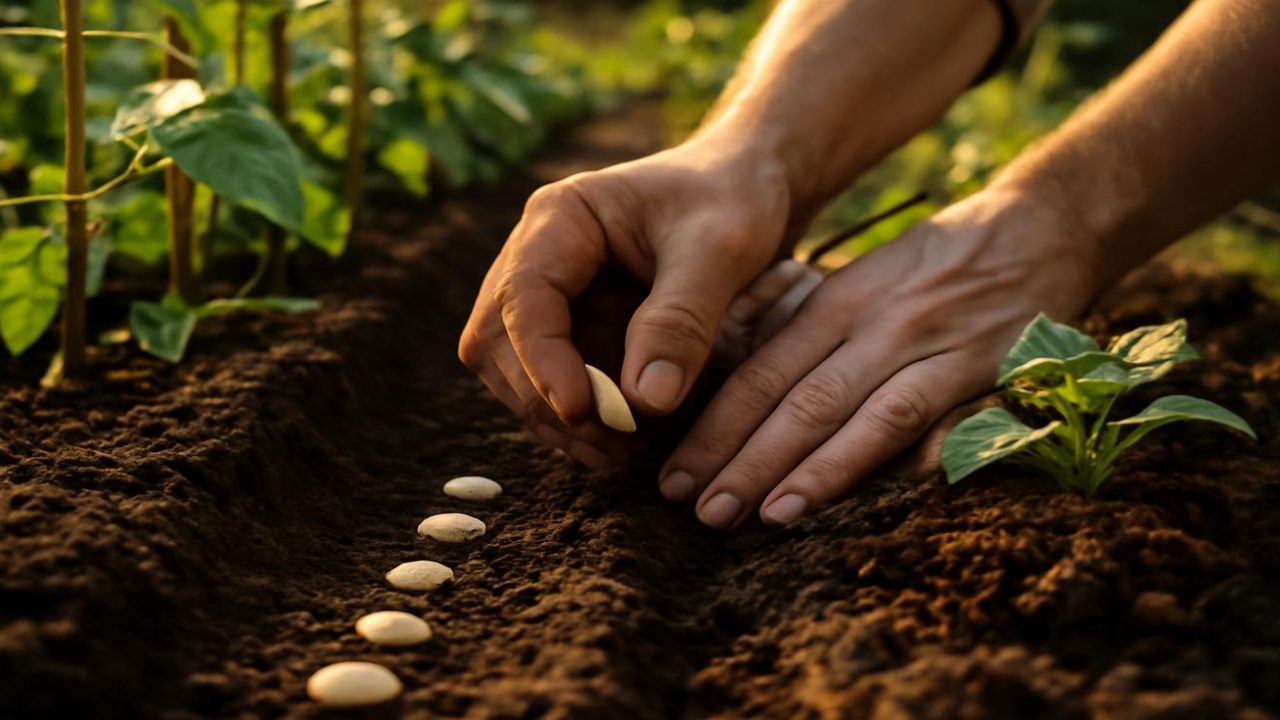
Gardeners around the world are quietly abandoning the traditional “poke a hole, drop a seed, cover, water” approach to planting beans. Instead, they’re experimenting with pre-soaking seeds, staggering planting times, and creating living support systems that are producing stronger vines, fuller pods, and more resilient plants.
This shift isn’t happening in research facilities or agricultural colleges. It’s taking root in backyards, balconies, and community gardens where home growers have noticed that the old reliable methods don’t always work as well as they used to in an era of unpredictable weather and exhausted soils.
The changes may seem small individually, but together they represent a fundamental rethinking of how to grow one of gardening’s most basic crops.

Why Traditional Bean Planting Methods Are Failing
For generations, beans were considered the foolproof garden crop – the one you’d give children to grow because success was virtually guaranteed. But climate challenges have made this simple approach less reliable.
Seeds now rot in waterlogged soil after sudden storms. Tender seedlings struggle in unexpected heat waves. Vines grow weak and spindly in soil that’s been depleted by years of intensive growing.
These problems have forced gardeners to pay closer attention to details they once took for granted: the feel and smell of soil, the way light moves through their growing spaces, and most importantly, what their plants are actually telling them about their needs.

Rather than following rigid planting calendars, today’s bean growers are becoming more responsive to both environmental conditions and plant behavior.
Revolutionary Bean Planting Techniques That Actually Work
The most widespread change involves what happens before beans ever touch soil. Instead of planting dry seeds directly in the ground, gardeners are pre-soaking their beans in bowls of water, often enhanced with liquid seaweed or compost tea.
Some take this preparation even further, laying soaked beans on damp paper towels or cloth until they see the first white thread of root emergence. This pre-germination gives plants a decisive head start when they’re finally transplanted.

Timing strategies have evolved as well. Rather than planting all beans on a single “safe” date after the last frost, gardeners now stagger their sowings in waves spaced a week or two apart. This creates a living insurance policy against weather disasters wiping out entire crops.
Support systems are getting creative too. Instead of traditional wooden or metal trellises, many growers now train their beans up living supports made from sunflowers and corn – creating beneficial plant partnerships that didn’t exist in conventional gardening.
| Planting Approach | Traditional Method | New Technique | Benefit |
|---|---|---|---|
| Seed Preparation | Plant dry seeds directly | Pre-soak or pre-sprout seeds | Faster germination, stronger starts |
| Timing | Single planting date | Staggered sowings over weeks | Weather disaster protection |
| Support Systems | Wooden/metal trellises | Living supports (sunflowers, corn) | Companion planting benefits |
| Soil Care | Basic fertilizer application | Compost, mulching, beneficial bacteria | Improved soil health and water retention |
How Modern Bean Growing Transforms Plant Health
These new approaches are producing measurably different results. Pre-soaked beans don’t waste energy trying to soften their seed coats underground. They know which direction to grow and move with purpose from the moment they’re planted.

Soil preparation has become more sophisticated as well. Modern bean growers are adding beneficial bacteria inoculants, creating forest-floor-style mulching systems, and building soil biology rather than just adding nutrients.
The staggered planting approach creates gardens where beans exist at different growth stages simultaneously. Walking through these spaces, you can see the practical wisdom: if one planting gets hit by unexpected weather, others at different stages continue thriving.
Container growing has expanded possibilities for urban gardeners. Beans grown in carefully prepared containers on balconies and rooftops are producing yields that rival traditional ground plantings, opening up bean cultivation to people without yard space.

What This Means for Home Food Production
This quiet revolution reflects a broader shift in how people think about growing food at home. Instead of following rigid rules passed down through generations, gardeners are becoming more observational and responsive.
The changes don’t require expensive equipment or specialized knowledge. Most involve simple adjustments to timing, preparation, and attention to plant needs rather than following predetermined schedules.
For urban growers especially, these techniques are making bean production viable in spaces that traditional methods couldn’t accommodate. Balcony containers and small-space vertical growing are becoming legitimate alternatives to large garden plots.

The focus on soil biology rather than just soil chemistry is creating growing systems that become more productive over time, rather than requiring constant external inputs to maintain fertility.
The Future of Backyard Bean Growing
These experimental approaches are spreading through gardening communities organically, shared through local garden clubs, online forums, and neighbor-to-neighbor conversations rather than formal agricultural extension programs.
Each growing season brings new refinements as gardeners test variations and share results. The emphasis on observation and responsiveness means these techniques continue evolving based on real-world performance rather than theoretical ideals.

The trend suggests a broader movement toward more resilient, locally-adapted growing methods that work with natural systems rather than imposing rigid schedules and inputs on plants.
For gardeners dealing with increasingly unpredictable weather, these flexible approaches offer practical solutions that don’t require major investments in infrastructure or technology.
Frequently Asked Questions
How long should I pre-soak bean seeds before planting?
Most gardeners soak beans for 8-24 hours until the seeds swell and their coats soften, similar to how fingertips wrinkle after a bath.

Can I add anything to the soaking water to help my beans?
Many gardeners add liquid seaweed or compost tea to create a weak tea-colored solution that provides gentle nutrition before planting.
How far apart should I space my staggered bean plantings?
Most successful gardeners space their successive plantings one to two weeks apart rather than planting everything on a single date.
Do these new methods work for all types of beans?
The source material focuses on general bean growing techniques without specifying particular varieties, though the principles appear applicable to common garden beans.
What are living trellises and how do they work?
Living trellises use companion plants like sunflowers and corn as natural support structures for climbing beans, creating beneficial plant partnerships.
Is container growing really as productive as ground planting?
According to current observations, carefully prepared container beans on balconies and urban spaces are producing yields that rival traditional ground plantings.











Leave a Comment