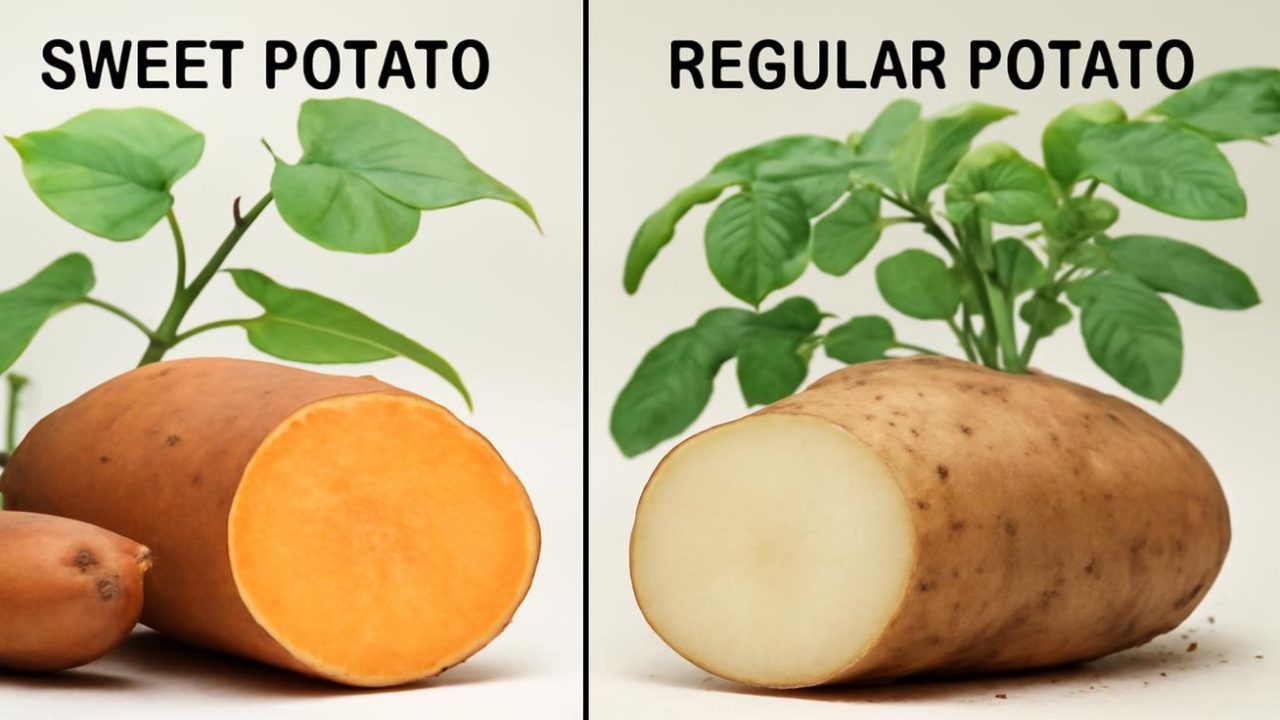
Sweet potatoes and regular potatoes are not closely related at all—despite sharing a name and sitting side by side in grocery stores, these two vegetables are about as botanically distant as tomatoes and morning glories.
The confusion makes perfect sense. Both grow underground, both are starchy, and both have “potato” in their names. Yet from a scientific perspective, they belong to completely different plant families separated by millions of years of evolution.
Regular potatoes are members of the nightshade family, making them botanical cousins to tomatoes, peppers, and eggplants. Sweet potatoes, meanwhile, belong to the morning glory family—they’re more closely related to ornamental flowering vines than to anything you’d typically find in the produce aisle.

Two Different Plant Families Tell the Story
The botanical evidence reveals just how different these “potatoes” really are. Regular potatoes, scientifically known as Solanum tuberosum, belong to the Solanaceae family. This puts them in the same group as tomatoes, peppers, eggplants, tobacco, and even deadly nightshade.
Sweet potatoes, or Ipomoea batatas, are card-carrying members of Convolvulaceae—the morning glory family. Their relatives include those heart-shaped, trumpet-flowered vines that climb garden fences and bloom at dawn.
Plant families represent major evolutionary branches. When botanists classify two plants in different families, they’re indicating a separation that reaches far back in evolutionary time—much further than the relationship between, say, different species within the same genus.

The visual clues become obvious once you know what to look for. Sweet potato plants produce sprawling vines with heart-shaped leaves and small purple-white funnel flowers that look exactly like their morning glory cousins. Regular potato plants grow more upright with compound leaves and small white or purple flowers typical of nightshades.
The Science Behind What Makes Them Different
The differences go much deeper than family trees. These vegetables are fundamentally different types of plant structures, despite both growing underground.
Regular potatoes are true tubers—swollen underground stems designed for food storage. Those little “eyes” scattered across a potato’s surface are actually buds capable of sprouting new shoots. Anyone who has forgotten potatoes in a dark pantry has witnessed those pale, snaking stems emerging from the eyes.

Sweet potatoes are something else entirely: swollen storage roots. They don’t have eyes or buds because they’re not stems—they’re roots that have expanded to store nutrients for the plant above ground.
| Characteristic | Regular Potato | Sweet Potato |
|---|---|---|
| Plant Family | Solanaceae (Nightshade) | Convolvulaceae (Morning Glory) |
| Underground Structure | Tuber (swollen stem) | Storage root |
| Scientific Name | Solanum tuberosum | Ipomoea batatas |
| Plant Growth | Upright stems | Sprawling vines |
| Related Plants | Tomatoes, peppers, tobacco | Morning glories, bindweed |
This structural difference explains why sweet potatoes can be propagated from slips (shoots grown from the root itself), while regular potatoes are typically grown from seed potatoes or pieces of tubers containing eyes.
Why the Mix-Up Happened in the First Place
The naming confusion has deep historical roots. When European explorers encountered sweet potatoes in the Americas, they were already familiar with regular potatoes. Both were starchy, underground food sources that could be cooked similarly.

The word “potato” itself comes from the Spanish “patata,” which was derived from the Taíno word “batata”—originally referring to what we now call sweet potatoes. Regular potatoes were initially called “papas” after the Quechua word, but eventually both vegetables ended up sharing variations of the “potato” name.
From a culinary standpoint, both vegetables filled similar roles in diets around the world. Both could be baked, boiled, mashed, or fried. Both provided essential carbohydrates and calories. Both stored well and could feed families through lean times.
The shared name stuck because function mattered more than botany in everyday life. People needed practical categories for cooking and farming, not scientific classifications.

What This Means for Nutrition and Cooking
Understanding the botanical differences helps explain why these vegetables behave so differently in the kitchen and offer distinct nutritional profiles.
Sweet potatoes contain compounds typical of their morning glory family, including higher levels of beta-carotene that give them their orange color. Their natural sweetness comes from different sugar compositions than what’s found in regular potatoes.
Regular potatoes, as nightshade family members, contain solanine—a natural compound that increases when potatoes turn green from light exposure. This is why green potatoes should be avoided, as solanine can be toxic in large quantities.

The different plant structures also explain cooking behaviors. Sweet potatoes, being storage roots, have different starch compositions and fiber arrangements. Regular potatoes, as modified stems, have cellular structures that create the fluffy texture prized in mashed potatoes and the crispy exterior possible in French fries.
Even their sprouting behaviors in storage reflect their botanical differences. Regular potato eyes respond to light and temperature cues like the stems they are. Sweet potatoes, being roots, respond to different environmental triggers entirely.
The Bigger Picture About Plant Relationships
This potato case study illustrates how common names can be misleading when it comes to understanding plant relationships. Many foods we think of as related are actually botanical strangers.

The nightshade family alone shows how diverse a single plant family can be—containing both nutritious vegetables like tomatoes and potatoes alongside toxic plants like belladonna. Meanwhile, the morning glory family spans from the sweet potatoes on our dinner plates to the ornamental vines decorating our gardens.
Scientists continue studying these plant relationships to better understand everything from crop breeding possibilities to nutritional compounds. Knowing that sweet potatoes and regular potatoes are unrelated helps explain why certain agricultural techniques, diseases, and breeding programs affect them differently.
For home gardeners, understanding these relationships can inform crop rotation strategies, companion planting decisions, and pest management approaches. Plants in the same family often share similar vulnerabilities and growing requirements.

Frequently Asked Questions
Are sweet potatoes and regular potatoes related at all?
They share a very distant common ancestor but belong to completely different plant families—they’re about as related as tomatoes and morning glories.
Why are they both called potatoes if they’re not related?
European explorers used similar names for both because they served similar functions as starchy, underground food sources, even though they’re botanically different.
What family do regular potatoes belong to?
Regular potatoes belong to the Solanaceae family, making them relatives of tomatoes, peppers, eggplants, and tobacco.
What makes sweet potatoes different structurally?
Sweet potatoes are swollen storage roots, while regular potatoes are tubers (modified underground stems with “eyes” that can sprout new plants).
Do sweet potatoes have eyes like regular potatoes?
No, sweet potatoes don’t have eyes because they’re roots, not stems—they’re propagated through slips rather than eye sprouting.
What family do sweet potatoes belong to?
Sweet potatoes belong to the Convolvulaceae family, which includes morning glories and other flowering vines.











Leave a Comment