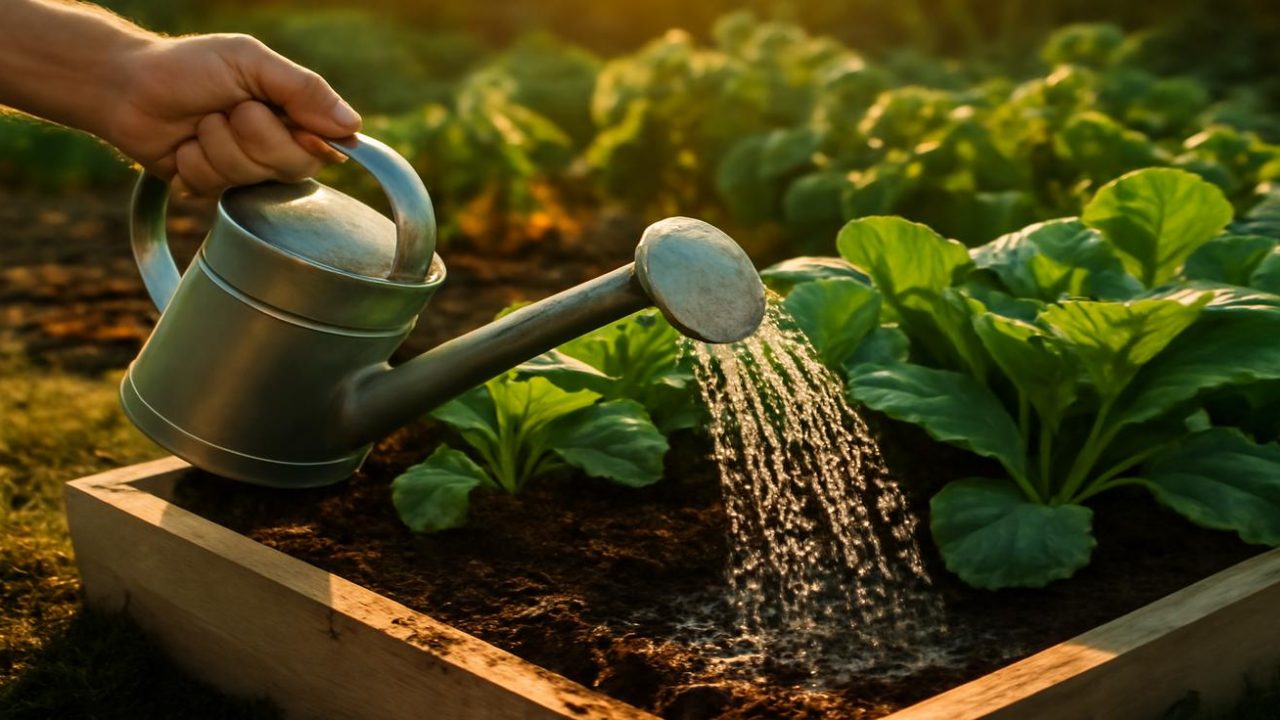
Retired teacher Eleanor Hartwell thought she’d mastered gardening after forty years of tending her sprawling backyard plot. When arthritis forced her to switch to raised beds last spring, she figured watering would be the easy part – just point the hose and let it flow like always.
Three weeks later, her prized tomatoes were wilting despite daily watering, while her neighbor’s ground-level plants thrived with the same routine. “I felt like a complete beginner again,” Eleanor recalls, staring at her struggling seedlings. “How could something as simple as lifting soil eighteen inches off the ground change everything?”
Eleanor’s frustration echoes across countless gardens where well-meaning gardeners discover that raised beds operate by completely different rules than traditional ground planting.

Why Your Raised Beds Drink Water Like a Desert
The fundamental difference lies in drainage and exposure. While ground soil benefits from natural water retention and protection from surrounding earth, raised garden beds essentially create an island of soil suspended above ground level.
This elevation transforms how water moves through your growing medium. Raised beds drain faster, dry out quicker, and lose moisture through multiple surfaces that ground soil never experiences.
Think of raised beds like a sponge sitting on your kitchen counter versus one sitting in a shallow pan of water. The elevated sponge will dry out much faster because it’s exposed to air on all sides.
— Marcus Chen, Soil Science Extension Agent

The sides of raised beds allow air circulation around the entire soil mass, creating evaporation from surfaces that would normally be insulated by surrounding earth. Additionally, the improved drainage that makes raised beds perfect for preventing root rot also means water moves through them much more quickly.
Temperature fluctuations add another layer of complexity. Raised beds heat up faster in spring – a gardening advantage – but they also cool down quicker and experience more dramatic temperature swings that affect soil moisture.
The Science Behind Different Watering Needs
Understanding the specific factors that make raised beds thirstier helps explain why your old watering schedule might be failing your elevated plants.

Key factors affecting raised bed water retention:
- Increased surface area exposure – sides and bottom allow moisture escape
- Enhanced drainage – water moves through faster than ground soil
- Wind exposure – elevated position increases evaporation from air movement
- Material heat absorption – wooden or metal sides can heat soil and increase water loss
- Soil composition differences – many raised bed soil mixes drain more readily than native ground soil
| Factor | Ground Soil | Raised Beds |
|---|---|---|
| Drainage Rate | Slow to moderate | Fast |
| Evaporation Surfaces | Top only | Top and all sides |
| Temperature Stability | Stable | Fluctuates more |
| Wind Exposure | Ground level protection | Full exposure |
| Watering Frequency | 2-3 times per week | Daily to every other day |
The soil composition in raised beds often differs significantly from ground soil. Many gardeners fill raised beds with purchased soil mixes that contain more perlite, compost, or other amendments designed to improve drainage – exactly the opposite of water retention.
I see gardeners struggle with this constantly. They buy a premium soil mix for their raised beds, which is great for plant health, but then wonder why they’re watering twice as often as their neighbors with clay soil.
— Rebecca Torres, Master Gardener Program Coordinator

Adapting Your Watering Strategy for Success
Successfully watering raised beds requires abandoning ground-level assumptions and embracing a more attentive approach. The good news? Once you understand the rhythm, raised beds often produce better results than traditional gardens.
Start by checking soil moisture daily during the first few weeks. Stick your finger two inches into the soil – if it feels dry, it’s time to water. This simple test will help you establish the right frequency for your specific setup.
Deep, less frequent watering works better than light daily sprinkles. When you do water, soak the soil thoroughly until you see water beginning to drain from the bottom. This encourages deep root growth and makes plants more resilient during dry spells.

Effective raised bed watering strategies:
- Morning watering – reduces evaporation and gives plants time to absorb moisture
- Drip irrigation or soaker hoses – delivers water directly to root zones
- Mulching – reduces surface evaporation by up to 50%
- Shade cloth during heat waves – protects against excessive moisture loss
- Adding water-retaining amendments – coconut coir or vermiculite help hold moisture
Mulching becomes even more critical in raised beds than ground gardens. A two-inch layer of organic mulch can dramatically reduce watering frequency while keeping soil temperatures more stable.
The biggest mistake I see is gardeners trying to water raised beds like they’re watering a lawn. These plants need focused, deeper watering sessions rather than quick surface sprinkles.
— David Kim, Urban Agriculture Specialist

Making Raised Beds Work for Your Lifestyle
The increased watering demands of raised beds don’t have to become a burden. Smart planning and simple modifications can make maintenance manageable while maximizing your harvest.
Consider installing a simple timer-controlled drip irrigation system if daily hand-watering feels overwhelming. These systems cost less than $50 and can automate the precise, deep watering that raised beds crave.
Plant selection also matters. Drought-tolerant varieties like herbs, peppers, and many flowers naturally adapt better to the faster-draining environment of raised beds. Save water-loving plants like lettuce and spinach for cooler seasons when evaporation rates drop.

Container gardening experience often translates well to raised bed success since both involve managing isolated soil environments. If you’ve successfully grown plants in large pots, you already understand the attentive watering approach that raised beds require.
Once gardeners adjust their expectations and watering habits, they usually find raised beds easier to manage than ground gardens. The key is accepting that they’re really managing large outdoor containers, not traditional garden plots.
— Lisa Martinez, Horticultural Therapist
Eleanor eventually mastered her raised beds by treating them more like oversized planters than garden plots. She installed a simple soaker hose system and learned to check soil moisture daily rather than following her old twice-weekly schedule.

Now her raised bed tomatoes outperform her old ground-level garden, and she appreciates the easier harvesting that comes with the elevated planting surface. “I wish someone had told me upfront that raised beds are basically giant containers,” she laughs. “It would have saved my first season’s tomatoes.”
FAQs
How often should I water my raised garden beds?
Most raised beds need watering every 1-2 days during growing season, compared to 2-3 times weekly for ground gardens.
Why do my raised beds dry out so much faster than my neighbor’s ground garden?
Raised beds have increased exposure to air and wind on all sides, plus faster drainage, causing them to lose moisture much quicker than ground-level soil.
Can I use the same soil in raised beds as regular garden soil?
Regular garden soil often doesn’t drain well enough for raised beds and may become too compacted. Raised bed soil mixes are specifically designed for container-style growing.
What’s the best way to check if my raised beds need water?
Stick your finger 2 inches into the soil. If it feels dry at that depth, it’s time to water thoroughly.
Will adding mulch really help reduce watering in raised beds?
Yes, a 2-inch layer of organic mulch can reduce evaporation by up to 50%, significantly decreasing how often you need to water.
Should I install irrigation in my raised beds?
Drip irrigation or soaker hoses work excellently in raised beds and can automate the deep, consistent watering these gardens need to thrive.










Leave a Comment