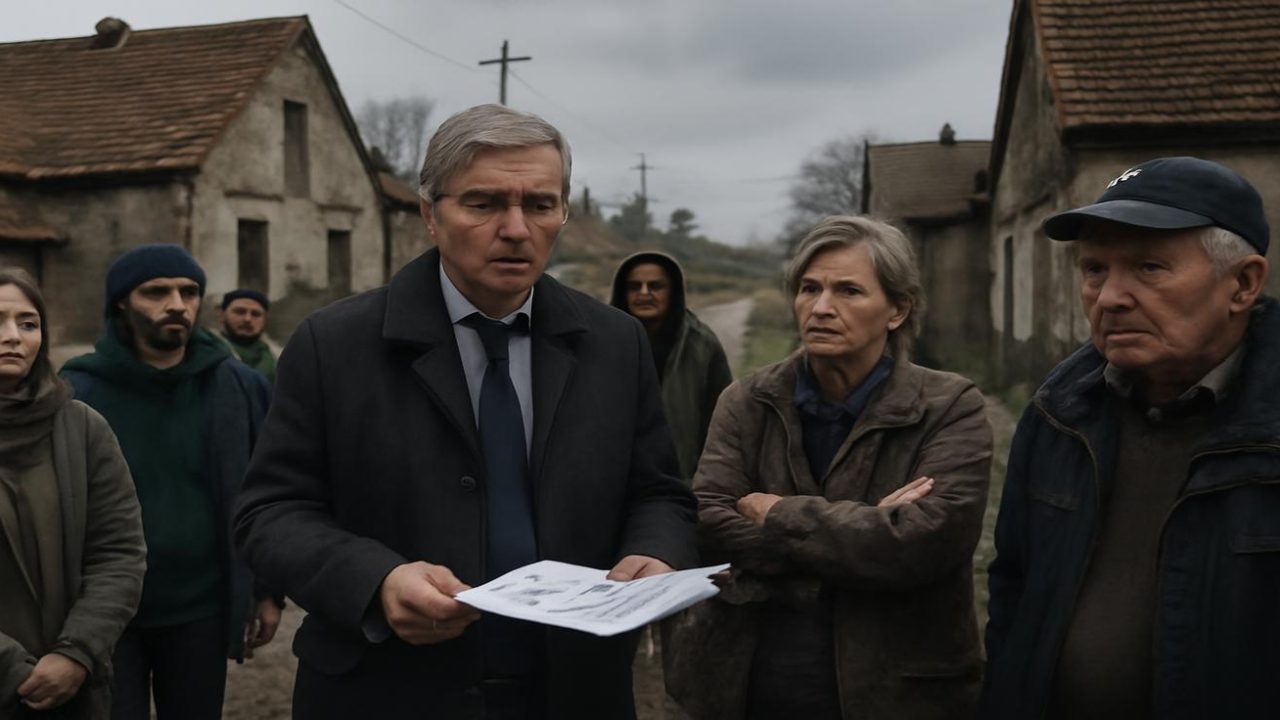
A village population has dropped from 1,150 residents in 2000 to just under 600 today, with 68 homes now sitting empty as the community faces a choice that could determine whether it survives or becomes what one local official calls “a postcard instead of a place.”
The dramatic proposal dividing this rural community centers on filling those vacant properties with refugee families—a plan that would bring approximately 100 new residents to a village where the school enrollment has plummeted to just 16 children and essential services are disappearing one by one.
The controversy has turned lifelong neighbors against each other as they grapple with a fundamental question: who gets to decide the future of the countryside when traditional rural life is slipping away?
The Numbers Behind a Community’s Desperate Gamble
When Mayor Tomas presented his refugee resettlement proposal to packed village hall, the statistics he shared painted a stark picture of rural decline that extends far beyond any single community.
The data reveals a pattern of steady erosion that has accelerated over the past two decades:
| Year | Population | Empty Homes | Village Shops & Pubs |
|---|---|---|---|
| 2000 | 1,150 | 12 | 2 shops, 3 pubs |
| 2010 | 920 | 28 | 1 shop, 2 pubs |
| 2020 | 740 | 53 | 1 shop, 1 pub |
| Now | Just under 600 | 68 | 1 shop, 1 pub (at risk) |
The village that once boasted three pubs, two grocers, a tailor, a blacksmith, and a cricket team now struggles to maintain basic services. The doctor’s surgery is under review, bus routes have been cut repeatedly, and the remaining pub operates under constant threat of closure.

These aren’t just numbers on a spreadsheet—they represent the collapse of rural infrastructure that once supported thriving communities across the countryside.
How the Refugee Resettlement Plan Would Work
The mayor’s proposal involves a partnership with regional council that would transform how the community approaches its housing crisis and population decline simultaneously.
Under the plan, the council would acquire empty properties through purchases at discounted rates or lease agreements with absentee owners who haven’t visited their properties in years. Government grants would fund necessary renovations to make the homes habitable.

Over three years, approximately thirty refugee families would move into the village—teachers, mechanics, nurses, and other professionals who fled war, drought, and disaster in their home countries. The influx would double the number of children in the local school and create enough demand to potentially reopen closed businesses.
The families would pay rent, shop at local stores, use public transportation, and integrate into community activities like the football team. The arrangement promises to address two crises simultaneously: providing stable housing for displaced people while revitalizing a dying rural community.
Funding would flow into the village not just for housing renovations but for supporting expanded services, including potential improvements to the school, healthcare access, and public transportation that could benefit all residents.

Why Rural Communities Are Facing This Impossible Choice
The village’s dilemma reflects broader challenges facing rural areas across many countries as young people migrate to cities for employment opportunities and older residents age in place without replacement.
Traditional rural economies built around agriculture, small manufacturing, and local services have been hollowed out by globalization and technological change. When the last factory closed, many working-age residents had little choice but to relocate, leaving behind elderly parents and empty houses.
Property ownership patterns have shifted dramatically, with many homes now owned by people living in Spain and London who visit rarely if ever. These absentee owners often lack incentive to maintain properties or sell to local buyers, creating a cycle of decay that accelerates community decline.

The loss of critical mass affects everything from school viability to public transportation routes. Bus services get cut when ridership falls below sustainable levels. Schools close when enrollment drops too low. Medical practices relocate when patient populations shrink.
For villages caught in this spiral, unconventional solutions like refugee resettlement represent one of the few remaining options for reversing demographic collapse before it becomes irreversible.
The Human Cost of a Community Divided
The proposal has fractured relationships that took decades to build, creating divisions between residents who see opportunity and those who perceive threat.
Long-term residents like Mara and Len, who have lived on the same lane for forty years, watch their adult children build lives in distant cities while their immediate neighbors maintain properties from abroad. Their lived experience of gradual abandonment shapes how they view the prospect of sudden demographic change.
Jan, who runs the remaining pub, faces the reality that his business depends on having enough local customers to remain viable. The arrival of 100 new residents could determine whether his establishment survives or becomes another casualty of rural decline.
Eighty-two-year-old Elsie represents the village’s living memory, having witnessed the transformation from a time when cattle were driven down the main street at dawn to the current era of empty houses and canceled bus routes.

These personal stories illustrate how policy decisions about refugee resettlement intersect with intimate questions of identity, belonging, and community survival that can’t be resolved through statistics alone.
What Happens Next for Rural Refugee Integration
The village’s decision will likely influence how other struggling rural communities approach similar demographic challenges and resettlement opportunities.
If residents approve the plan, the three-year timeline would begin with property acquisition and renovation, followed by gradual family placement designed to allow for community adjustment and integration support.

Success would be measured not just by population numbers but by indicators like school enrollment stability, business viability, and public service maintenance. The pilot could demonstrate whether refugee resettlement represents a viable model for rural revitalization.
Failure could accelerate the village’s decline, potentially leading to school closure, loss of remaining businesses, and the transformation of a living community into what the mayor fears most—a picturesque but empty reminder of rural life that once was.
The outcome may help answer whether rural communities can adapt to 21st-century demographic realities while preserving the essential character that makes them worth saving.
Frequently Asked Questions
How many refugee families would move to the village under this plan?
Approximately thirty refugee families totaling around 100 people would relocate over a three-year period.
What types of jobs do these refugees have?
The families include teachers, mechanics, nurses, and other professionals who fled war, drought, and disaster in their home countries.
How would the empty houses be acquired for the program?
The regional council would buy properties at discounted rates or lease them from absentee owners, with government grants funding necessary renovations.
What happened to cause the village’s population decline?
The population dropped from 1,150 in 2000 to under 600 today due to factory closures, young people moving to cities, and the general collapse of rural economic opportunities.
How many children currently attend the village school?
Only 16 children are enrolled in the village school, and the refugee families would approximately double that number.
What services has the village already lost?
The village has lost two of its three pubs, one of two grocery stores, and faces potential closure of its doctor’s surgery, while bus routes have been repeatedly cut.









Leave a Comment